

Tag: Family SUV

  • 2026 Hyundai Santa Fe Hybrid: Price, MPG, Trims, and Family Value

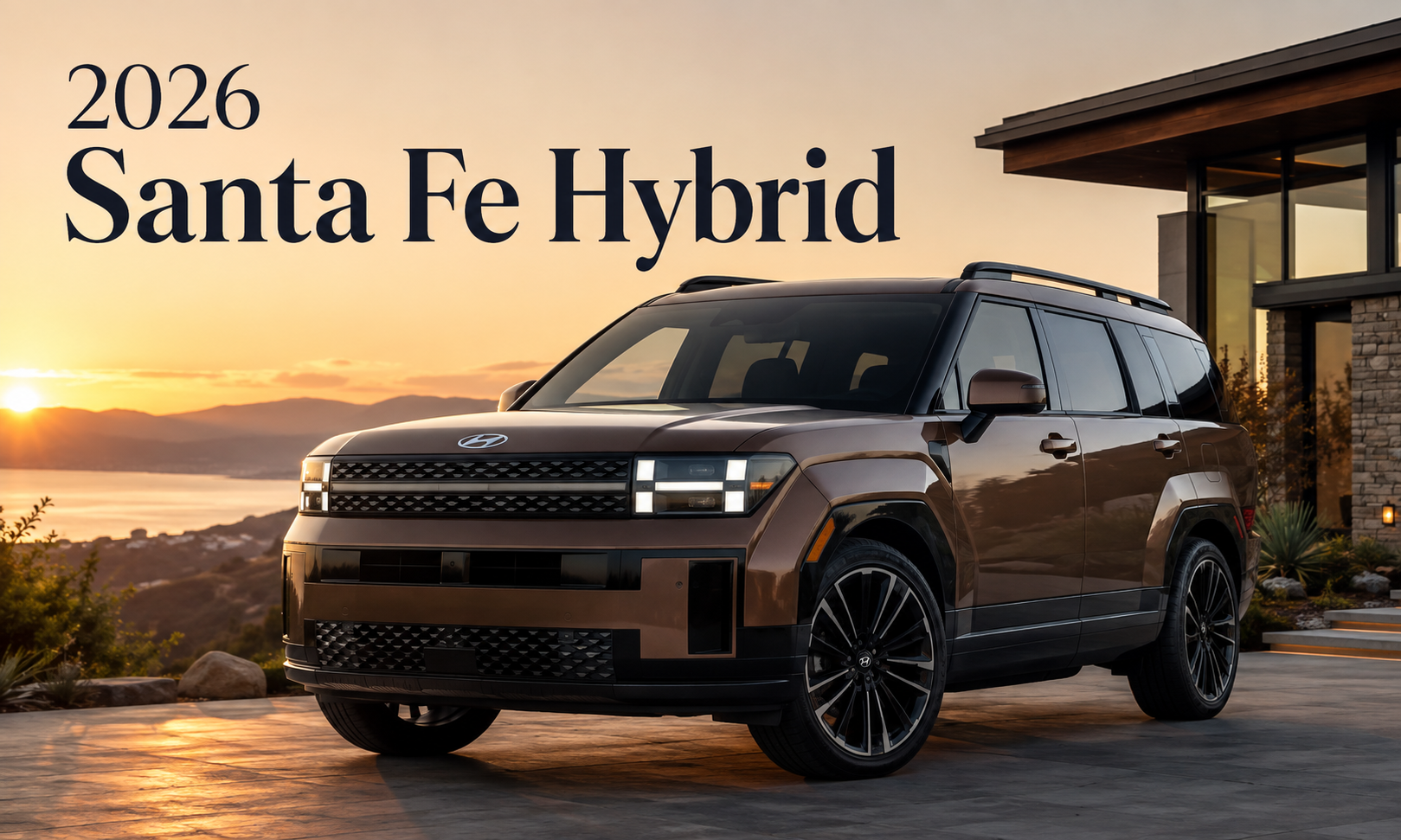
    2026 Hyundai Santa Fe Hybrid: Price, MPG, Trims, and Family Value

    A U.S. buyer’s guide to hybrid savings, three-row space, trim choices, towing, technology, safety, and daily usability

    The 2026 Santa Fe Hybrid is a three-row family SUV built around efficiency, comfort, and flexible interior space rather than rapid acceleration or serious off-road ability. Its turbocharged hybrid powertrain produces 231 horsepower, front-wheel drive is standard, all-wheel drive is optional, and EPA estimates reach 36 mpg combined.

    For 2026, Hyundai adds a less expensive SE trim and makes several small equipment changes across the range. The result is one of the more affordable ways to combine hybrid fuel economy with six- or seven-passenger seating, although shoppers should understand that the third row is compact and the 2,000-pound towing limit is modest.

    Key Takeaways

    Hyundai lists four hybrid trims: SE, SEL, Limited, and Calligraphy, with front-wheel drive or optional HTRAC all-wheel drive.

    The powertrain combines a turbocharged 1.6-liter four-cylinder with an electric motor for 231 horsepower and uses a conventional six-speed automatic.

    Front-wheel-drive models are rated at 37 mpg city, 36 highway, and 36 combined; all-wheel-drive versions are rated at 35 city, 34 highway, and 34 combined.

    The Santa Fe Hybrid seats six or seven, but its third row is best for children, shorter adults, or occasional use.

    Cargo capacity is 14.6 cubic feet behind the third row, 40.5 behind the second row, and 79.6 behind the front seats.

    The hybrid can tow up to 2,000 pounds with trailer brakes, so buyers with heavier trailers should consider the gas Santa Fe or another SUV.

    What Is New for the 2026 Santa Fe Hybrid?

    The biggest lineup change is the new SE base trim. It lowers the entry point for families that want the hybrid powertrain without leather seating, larger wheels, or the most advanced convenience features.

    The SEL gains USB charging ports for third-row passengers. Limited models now include second-row captain’s chairs and dual wireless phone chargers as standard equipment, although a no-cost second-row bench remains available. Calligraphy buyers can choose a new Pecan Brown Nappa leather interior.

    The Car and Driver 2026 Santa Fe Hybrid review gives the SUV a 9 out of 10 rating and highlights its distinctive styling, strong standard equipment, practical cabin, and good fuel economy. Its main criticisms are slow acceleration, ordinary handling, and a tight third row.

    How Much Does the 2026 Hyundai Santa Fe Hybrid Cost?

    Hyundai’s published pricing sheet lists base MSRPs from $36,150 to $50,250 before a $1,600 freight charge. Car and Driver rounds the retail range to approximately $38,000 to $52,100. Taxes, title, registration, documentation fees, accessories, and dealer pricing are additional.

    Trim FWD Base MSRP AWD Base MSRP Best Fit
    SE $36,150 $37,950 Budget-focused families wanting the hybrid powertrain
    SEL $38,440 $40,240 Best balance of comfort, technology, and price
    Limited $45,450 $47,250 Buyers wanting leather, premium technology, and added convenience
    Calligraphy $48,450 $50,250 Shoppers prioritizing Nappa leather, advanced assistance, and top features

    The SEL is the strongest value for most buyers. It adds useful daily equipment without the large price jump to Limited. The SE makes sense when the goal is simply to obtain the hybrid drivetrain and three-row body at the lowest cost.

    How Does the Hybrid Powertrain Perform?

    Every Santa Fe Hybrid uses a turbocharged 1.6-liter four-cylinder, an electric motor, and a six-speed automatic transmission. Combined output is 231 horsepower. Unlike many hybrids that use a continuously variable transmission, the Hyundai shifts through traditional gears, which can make acceleration feel more familiar.

    The system is tuned for smooth city driving and relaxed family transportation. Electric assistance helps the SUV move away from stops without requiring the gasoline engine to work as hard, but highway passing can feel slow when the vehicle is full of passengers and luggage.

    Specification 2026 Santa Fe Hybrid
    Engine Turbocharged 1.6-liter four-cylinder hybrid
    Combined output 231 horsepower
    Transmission 6-speed automatic with SHIFTRONIC
    Drivetrain Front-wheel drive or HTRAC all-wheel drive
    Car and Driver 0 to 60 mph 7.8 seconds
    Fuel tank 17.7 gallons
    Maximum trailer weight with brakes 2,000 pounds
    Ground clearance 7.0 inches

    Car and Driver recorded a 7.8-second 0-to-60-mph time in its testing. The gas-powered Santa Fe is quicker, but the hybrid’s calmer response is adequate for commuting, school runs, and normal interstate travel.

    How Much Fuel Can the Hybrid Save?

    Front-wheel-drive Santa Fe Hybrid models are EPA-rated at 36 mpg combined, compared with 24 mpg combined for the gas Santa Fe FWD. All-wheel-drive hybrid models are rated at 34 mpg combined, compared with 23 mpg combined for the regular AWD version.

    The hybrid price premium is approximately $1,350 when equivalent trims and drivetrains are compared using Hyundai’s pricing sheet. The following example assumes 12,000 miles per year and gasoline at $3.50 per gallon.

    Vehicle Combined MPG Estimated Annual Fuel Cost Difference
    Santa Fe Hybrid FWD 36 mpg $1,167 Baseline
    Santa Fe Gas FWD 24 mpg $1,750 About $583 more per year
    Santa Fe Hybrid AWD 34 mpg $1,235 Baseline
    Santa Fe Gas AWD 23 mpg $1,826 About $591 more per year

    At those assumptions, the fuel savings could recover the $1,350 hybrid premium in a little over two years. The payback becomes faster with higher mileage or higher gasoline prices and slower for low-mileage drivers. Actual economy also changes with weather, speed, traffic, tires, cargo, and driving style.

    Is the Santa Fe Hybrid Spacious Enough for a Family?

    The first two rows are the strongest part of the cabin. Front-seat occupants receive generous space, a wide center console, and a dashboard with useful storage. Second-row legroom is adult-friendly, and captain’s chairs make third-row access easier.

    The third row is more limited. It can handle children, shorter adults, or occasional passengers, but families that regularly carry six or seven adults should compare the Hyundai Palisade Hybrid, Toyota Grand Highlander Hybrid, or another larger three-row SUV.

    Interior Measurement Capacity
    Second-row legroom in hybrid models 41.5 inches
    Third-row legroom 30.0 inches
    Cargo behind third row 14.6 cubic feet
    Cargo behind second row 40.5 cubic feet
    Cargo behind front seats 79.6 cubic feet
    Passenger interior volume 151.0 cubic feet

    Behind the third row, there is enough space for groceries, school bags, or several small suitcases, but not a large family vacation load. Folding the third row creates a broad cargo floor that is much more useful for strollers, sports equipment, pets, and home-improvement supplies.

    Should You Choose Front-Wheel Drive or All-Wheel Drive?

    Front-wheel drive provides the lowest price and best fuel economy. It is the logical choice for drivers in warm or moderate climates who spend most of their time on paved roads.

    HTRAC all-wheel drive adds $1,800 and reduces combined fuel economy from 36 to 34 mpg. It can provide extra confidence in snow, heavy rain, gravel, and steep driveways, but tires remain the most important traction component. A front-wheel-drive vehicle with appropriate winter tires can outperform an AWD vehicle on unsuitable tires.

    Choose FWD If You… Choose AWD If You…
    Want the lowest purchase and fuel cost Regularly drive in snow or on steep roads
    Live in a mild climate Use gravel roads, cabins, or rural properties
    Mostly commute on maintained pavement Prefer added traction confidence
    Do not need Snow mode Accept the higher price and 2-mpg efficiency loss

    Can the Santa Fe Hybrid Tow a Trailer?

    The hybrid is rated to tow up to 2,000 pounds with trailer brakes and 1,650 pounds without trailer brakes. That can be enough for a small utility trailer, lightweight personal watercraft, or certain compact campers, but the rating leaves little room for heavier recreational equipment.

    The gas Santa Fe is rated for 3,500 pounds, while the XRT reaches 4,500 pounds. Buyers who tow frequently should calculate trailer weight, tongue weight, passengers, cargo, and the exact vehicle payload rather than relying only on the maximum advertised tow figure.

    Which Trim Is the Best Buy?

    Trim Why Buy It Why Skip It
    SE Lowest price, 12.3-inch touchscreen, three rows, core safety equipment Basic cloth cabin and fewer convenience features
    SEL Best value, upgraded seating material, Digital Key, wireless charging, third-row USB ports Still lacks several premium cameras and luxury features
    Limited Leather, dual wireless chargers, advanced displays, cameras, ventilated seats Large price jump over SEL
    Calligraphy Nappa leather, head-up display, Highway Driving Assist 2, premium appearance Price approaches larger and more powerful SUVs

    What Technology and Safety Features Are Included?

    All trims use a 12.3-inch infotainment touchscreen with wireless Apple CarPlay and Android Auto. Depending on trim, buyers can add a 12.3-inch digital gauge cluster, Bose audio, dual wireless charging, a head-up display, surround-view cameras, a digital rearview mirror, and remote parking assistance.

    Standard driver-assistance features include forward collision avoidance, blind-spot monitoring, rear cross-traffic collision avoidance, lane keeping assistance, lane following assistance, driver attention warning, and safe exit assistance. Higher trims add more advanced parking and highway-driving systems.

    The IIHS 2026 Hyundai Santa Fe safety page identifies the Santa Fe as a 2026 Top Safety Pick+ winner. Safety ratings apply to specific production details and test criteria, so buyers should still check the exact vehicle’s build date and equipment.

    What Warranty Does Hyundai Provide?

    Hyundai’s U.S. coverage includes a 5-year or 60,000-mile new-vehicle limited warranty and a 10-year or 100,000-mile powertrain limited warranty for the original owner. Hybrid battery and major hybrid-system components are also covered for 10 years or 100,000 miles.

    Complimentary scheduled maintenance is included for 3 years or 36,000 miles under Hyundai’s current program. Buyers should read the warranty handbook because transfer rules, maintenance requirements, exclusions, and commercial-use conditions can affect coverage.

    Frequently Asked Questions

    How much is the 2026 Hyundai Santa Fe Hybrid?

    Hyundai’s pricing sheet lists base MSRPs from $36,150 for the SE FWD to $50,250 for the Calligraphy AWD before the $1,600 freight charge and other fees.

    How many miles per gallon does it get?

    FWD models are rated at 37 mpg city, 36 highway, and 36 combined. AWD versions are rated at 35 city, 34 highway, and 34 combined.

    Does the Santa Fe Hybrid have three rows?

    Yes. It seats six or seven depending on the second-row configuration, but the third row is best for smaller passengers or occasional use.

    Is the Santa Fe Hybrid a plug-in?

    No. It is a conventional hybrid that charges its battery through the engine and regenerative braking. It does not need to be plugged in.

    How much can it tow?

    The maximum rating is 2,000 pounds with trailer brakes or 1,650 pounds without them.

    Is the hybrid faster than the gas Santa Fe?

    No. Car and Driver recorded 7.8 seconds to 60 mph for the hybrid, while the gas model was quicker in its testing.

    Which trim is the best value?

    SEL offers the best balance for most buyers, while SE has the lowest price and Limited provides the strongest premium-feature value.

    The Bottom Line

    The 2026 Hyundai Santa Fe Hybrid succeeds as an efficient and flexible family SUV. It offers a comfortable first and second row, useful cargo space, a broad trim range, strong safety equipment, and fuel economy that can repay the hybrid premium in a relatively short period for many drivers.

    Its limitations are equally clear. Acceleration is modest, the third row is tight, and the towing capacity is only 2,000 pounds. Buyers who accept those tradeoffs will find the SEL especially compelling, while Limited and Calligraphy provide a more upscale experience without moving to a luxury badge.

  • Volkswagen Atlas 2026: Buy Now or Wait for 2027?

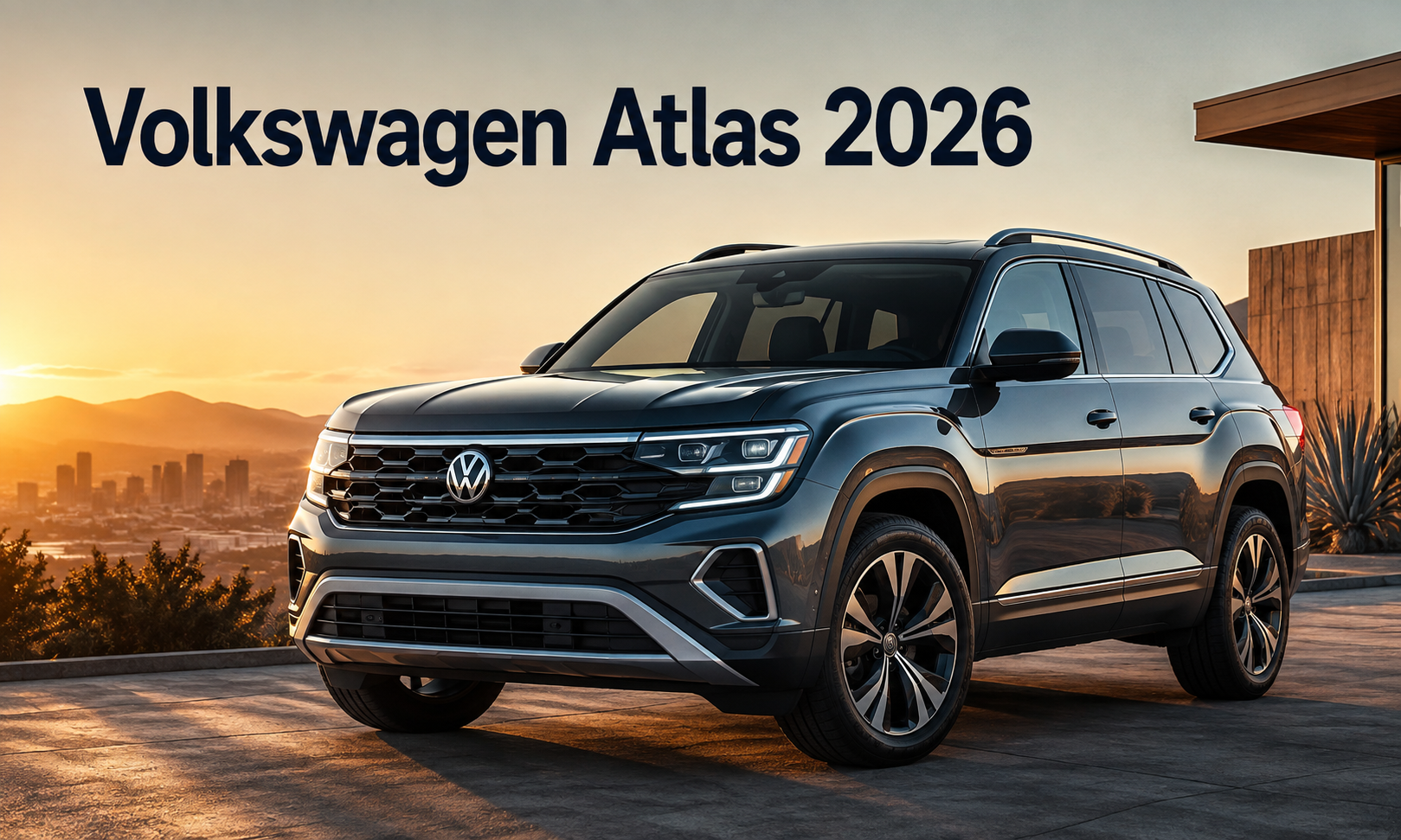
    Volkswagen Atlas 2026: Buy Now or Wait for 2027?

    A family-focused comparison of price, trims, space, performance, towing, technology, discounts, and the redesigned next-generation Atlas

    2026 Atlas fact Details
    Starting MSRP $39,310 before the $1,475 destination charge
    Delivered base price $40,785 for the SE FWD
    Engine 269-hp turbocharged 2.0-liter four-cylinder
    Torque 273 lb-ft
    Transmission Eight-speed automatic
    Drivetrains Front-wheel drive or 4Motion all-wheel drive
    Seating Up to seven; available second-row captain’s chairs reduce capacity to six
    Maximum cargo 96.6 cubic feet
    Maximum towing 5,000 pounds when properly equipped
    Best-value trim SE with Technology
    The short verdict

    Buy the 2026 Atlas when you need a spacious three-row SUV now and can secure a meaningful discount. Wait for the 2027 Atlas when its stronger 282-hp engine, larger screens, more premium cabin, revised controls, and newest safety technology justify a higher expected price.

    Volkswagen Atlas 2026 remains a strong family SUV because it offers adult-friendly third-row space, easy cabin access, generous cargo capacity, a comfortable ride, and useful towing ability. Its main weakness is timing: the redesigned 2027 Atlas has already been revealed, which may make paying full sticker price for the outgoing model difficult to justify.

    This does not automatically make the 2026 model a poor purchase. An outgoing vehicle can provide excellent value when dealers offer cash discounts, favorable financing, or a better trade allowance. The right decision depends on how soon you need the SUV, how much you save, and whether the next-generation changes matter to your family.

    2026 Atlas Price and Trim Ladder

    Volkswagen lists the 2026 Atlas from $39,310 before destination. Adding the current $1,475 destination charge produces a delivered base price of $40,785. Four-wheel drive adds approximately $1,900 on trims where it is optional.

    Trim Approx. delivered price Best feature Best buyer
    SE FWD $40,785 Lowest price with strong standard comfort Budget-focused family
    SE with Technology FWD $45,205 Power liftgate, parking sensors, hitch, remote start Best overall value
    Peak Edition Upper $40,000s to low $50,000s Rugged styling and standard AWD Adventure-style buyer
    SEL Low to mid $50,000s Navigation, leather, added driver aids Comfort-focused buyer
    SEL Premium R-Line $56,105 Top cabin, audio, cameras, massage seats Luxury-focused buyer

    The supplied Car and Driver 2026 Volkswagen Atlas review rates the SUV 8 out of 10 and lists a $40,785 to $56,105 delivered-price range. Its strongest points are the roomy seven-seat cabin, compliant ride, large cargo area, and 5,000-pound tow rating.

    Why SE with Technology Is the Sweet Spot

    The SE with Technology adds equipment that families use regularly rather than cosmetic luxuries. It includes a hands-free power liftgate, front and rear parking sensors, remote start, a household-style outlet, upgraded exterior lighting, 20-inch wheels, and a factory trailer hitch.

    The trim costs approximately $4,420 more than the base SE before adding AWD or options. That is a meaningful increase, but it is easier to justify than jumping to the top trims, where leather, premium audio, massage seats, and larger wheels raise the transaction price without improving basic family utility.

    Engine, Acceleration, and Road Manners

    Every 2026 Atlas uses a 269-hp turbocharged 2.0-liter four-cylinder with 273 lb-ft of torque and an eight-speed automatic. The engine provides adequate power for merging, passing, and family travel, although it does not feel especially energetic when the SUV is fully loaded.

    Car and Driver recorded a 7.3-second 0-to-60-mph time. The Atlas favors calm, predictable road behavior rather than sporty handling. Its broad body and relaxed suspension create some lean in corners, but the ride is comfortable for highway trips and rough suburban roads.

    The Atlas returned 25 mpg in the publication’s 75-mph highway fuel-economy test. EPA ratings vary by drivetrain and trim, so buyers should compare the exact window sticker rather than assuming every version has the same mileage.

    Family Space Is the Main Reason to Buy

    Family need 2026 Atlas strength Compromise
    Third-row adults One of the roomiest in the class Seat padding is not the most luxurious
    Child-seat access Second row moves easily for third-row entry Captain’s chairs reduce total seating
    Cargo behind third row Useful for groceries and small bags Long vacations may still require roof storage
    Maximum cargo 96.6 cubic feet Large exterior size affects parking
    Road trips Comfortable ride and open cabin Touch controls can distract
    Towing Up to 5,000 pounds Confirm payload and hitch equipment

    The Atlas seats seven with a second-row bench or six with available captain’s chairs. The third row is more usable for adults than the small emergency seats found in several rivals. Maximum cargo capacity is 96.6 cubic feet with the rear rows folded.

    Technology and Cabin Weaknesses

    Standard equipment includes a 12-inch touchscreen, a 10.25-inch digital instrument display, wireless Apple CarPlay and Android Auto, wireless phone charging, three-zone climate control, ventilated front seats, and a heated steering wheel.

    The main criticism is the reliance on touch-sensitive controls. Climate and volume adjustments can require more attention than physical knobs, and some buyers find the cabin materials less convincing than those in the Kia Telluride, Hyundai Palisade, or Mazda CX-90.

    What the Redesigned 2027 Atlas Changes

    The 2027 Atlas begins a new generation. It moves to an updated platform, grows slightly in length, gains a more powerful 282-hp version of the turbocharged four-cylinder, and retains the eight-speed automatic, FWD, available AWD, and 5,000-pound towing capacity.

    Area 2026 Atlas 2027 Atlas
    Engine output 269 hp and 273 lb-ft 282 hp and 258 lb-ft
    Center display 12 inches 12.9 inches on base, 15 inches on higher trims
    Cabin controls Touch-heavy interface New multifunction console control
    Interior design Practical but ordinary materials More upscale trim and ambient lighting
    Wireless charging Single-pad setup depending on trim Available dual wireless chargers
    Availability On sale now Expected later in 2026
    Pricing Known and potentially discounted Higher expected pricing

    Volkswagen’s official 2026 Atlas page confirms the current 269-hp engine, 273 lb-ft of torque, 96.6 cubic feet of maximum cargo room, and 5,000-pound towing capacity. Those known specifications make the 2026 easier to price and compare than the newly announced replacement.

    When Buying the 2026 Makes More Sense

    • You need a three-row SUV before the redesigned model reaches dealers.
    • A dealer offers a meaningful discount, low APR, or strong trade value.
    • You prefer proven equipment over a first-year redesign.
    • The current 12-inch screen and controls are acceptable.
    • The SE with Technology has all the features your family needs.
    • You plan to keep the vehicle long enough that immediate resale value matters less.

    When Waiting for 2027 Makes More Sense

    • You want the newest interior and larger screen.
    • You dislike the current touch-based interface.
    • A more powerful engine and newer safety systems matter.
    • You normally replace vehicles after only three to five years.
    • The 2026 dealer is asking close to full MSRP.
    • You are willing to accept possible launch pricing and limited early inventory.
    Discount rule of thumb

    The closer a 2026 Atlas is priced to full MSRP, the stronger the argument for waiting. A substantial discount can offset the disadvantage of buying the outgoing generation, especially on an SE with Technology.

    How the 2026 Atlas Compares With Rivals

    Rival Why it may be better Why the Atlas may be better
    Kia Telluride More polished cabin and stronger overall refinement Roomier-feeling third row and possible discounts
    Hyundai Palisade Excellent features and upscale interior Simple powertrain choice and large cargo space
    Honda Pilot Strong V6 and family-friendly controls More adult-friendly third row
    Toyota Grand Highlander Available hybrid efficiency Potentially lower transaction price
    Mazda CX-90 More engaging handling and premium design Broader cabin and easier third-row access

    Frequently Asked Questions

    How much is the 2026 Volkswagen Atlas?

    The SE FWD starts at $39,310 before destination, or $40,785 including the current $1,475 destination charge.

    Which 2026 Atlas trim is best?

    The SE with Technology offers the strongest balance of useful family features and price.

    Does the Atlas have a V6?

    No. Every 2026 Atlas uses a 269-hp turbocharged 2.0-liter four-cylinder.

    How much can it tow?

    Up to 5,000 pounds when properly equipped. Confirm the exact vehicle’s hitch and payload ratings.

    Is the third row comfortable?

    It is among the more adult-friendly third rows in the midsize SUV class.

    Should I wait for the 2027 Atlas?

    Wait when technology, resale value, and the redesigned cabin matter more than possible discounts on the outgoing model.

    Final Verdict

    The 2026 Volkswagen Atlas is still a practical and comfortable family SUV. Its spacious third row, easy access, large cargo area, and 5,000-pound towing capacity remain competitive even as the model reaches the end of its generation.

    Buy the SE with Technology when the dealer offers a worthwhile discount and you need the vehicle now. Wait for the 2027 Atlas when the new interior, more powerful engine, larger displays, and stronger future resale position are worth paying more.